Where we pour
Spokane is home. Most weekends, the cart never leaves it.
Sigo is based in Spokane, and most bookings stay right here — a backyard on the South Hill, a loft downtown, a rooftop in Kendall Yards, a taproom in Browne’s Addition. If your venue is inside city limits, this is about as straightforward as a booking gets.
From South Perry and the Garland District to the Logan and Emerson neighborhoods near Gonzaga, the cart shows up the same way everywhere — self-contained, set up before your first guest arrives, pouring until the last one has had a drink.
Most in-city bookings come down to one question, and it is never about coffee: where the cart can park, and what it has to get through to reach the room. Send the address and the load-in window and that part is settled before you have to think about it.
In the city, that split shows up most for wedding receptions on the South Hill and corporate mornings downtown. Just outside the city, the same cart covers Spokane Valley & Liberty Lake and Green Bluff.
Check Your Date →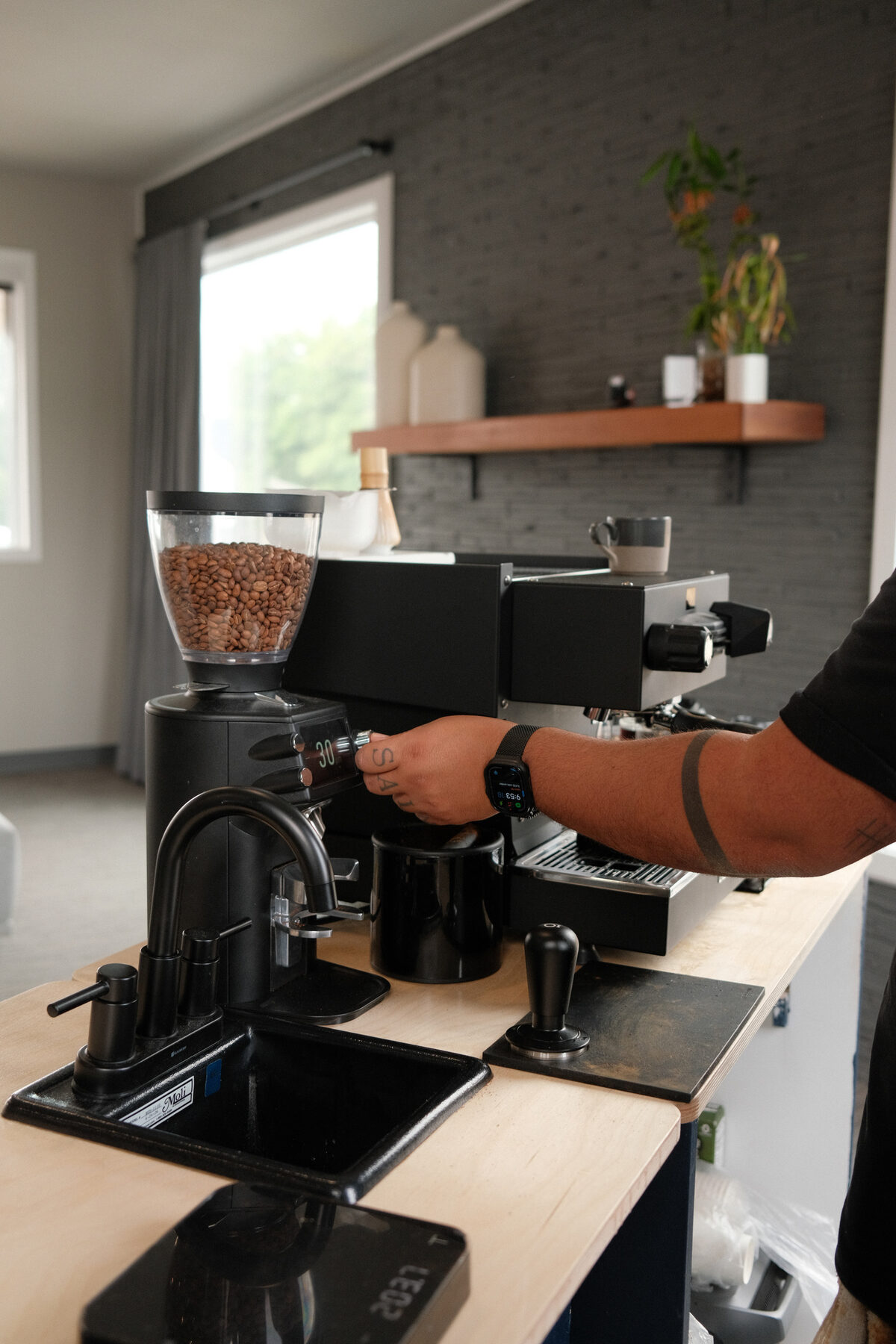
Working an in-city venue
Your building does not have to accommodate us.
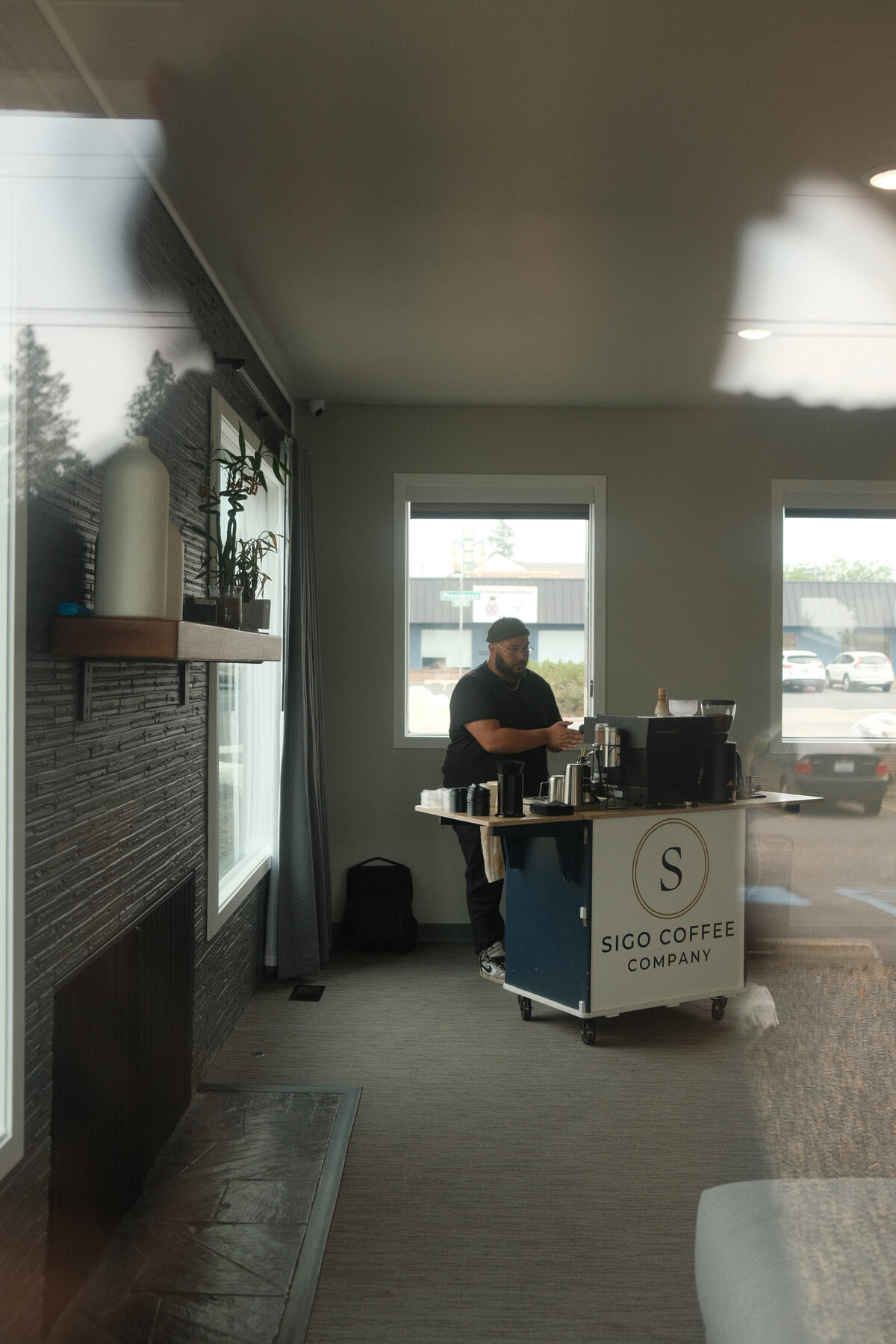
Downtown lofts and century-old buildings were never wired for a coffee bar. The cart does not ask them to be — it arrives carrying everything it runs on.
Nothing on your building’s panel
Older downtown buildings and converted lofts tend to have wiring that was never meant to carry a commercial espresso machine. The cart runs off its own battery bank, so nothing gets plugged into the building at all.
No sink, no spigot
Water for the service window rides with us and the waste water leaves with us. Nothing goes down a venue’s drain and nothing has to be carried through a shared kitchen.
Fits through a standard doorway
The cart is just under six feet long and just under two feet deep. It clears a normal doorway and a freight elevator, which is usually the real question in an older building with stairs at the front.
Built around a downtown load-in
In the city core the constraint is almost always street parking and a loading zone rather than the room itself. Send the window your venue gives you and the cart is set up and pouring inside it.
Good to know
Other ways to gather
Every kind of
Spokane event.
Downtown bookings aren’t only office pours — weddings and private gatherings run through the same cart.
Weddings
A full espresso bar and signature drinks for the ceremony, the reception, or both.
See weddings →Corporate Events
On-site brewing, custom menus, and hospitality for the whole office.
See corporate events →Private Gatherings
Flexible booking and custom drinks for birthdays, showers, and small gatherings.
See private gatherings →Pick a date
in Spokane.
Check Your Date →
See every area we cover: Service area overview →